Thursday, February 16, 2006

Losing my sense of humor…

Tagged as:
Sung to the tune of REM’s song…

“Did you know that a German paper has published a cartoon of the Iranian national team as suicide bombers?”

I laugh. K doesn’t think it’s funny. “It’s an insult to the Iranian people, not to our government.”

“I am sure that they did not caricature the individual players.”

“It is still our team.”

The paper's editors are clueless as to why portraying athletes as terrorists might have outraged Iranians. "The absurdity of the situation is obvious," editor Gerd Appenzeller writes in an opinion piece. No one, he argues, would ever believe that the Iranian team would show up armed -- nor would the Bundeswehr be present on the soccer pitch. "The illustrator makes that clear," he explains. "The Iranians' faces, just like those of the Germans, are those of peaceful everyday people -- the boys next door" -- not rabid terrorists. The paper said it "regretted the Iranian reactions to the caricature" and that it would be hard to explain the domestic political debate over deploying the Bundeswehr during the World Cup to the Iranians.


Don’t joke about football in Iran… the riots will really start!

“Iran deserves it. They advertise for suicide bombers, train them, reward them. What do they expect?”


“Now an Iranian paper is sponsoring a contest for cartoons about the Holocaust.”

“That’s sick.”

“That’s where free speech gets you…”

“No one is making fun of the Iranians who were gassed during the war with Iraq. They are not the subject of cartoons. Surely you see the difference.”

“Of course I see the difference. But when I go to Europe people see me as a terrorist. That’s what bothers me.”

Iranians know that the rest of the world sees them as terrorists. It really, really disturbs them. But they are out of control of their image abroad. It’s been hijacked.

“Why can’t we be a normal country?”

“What’s normal?”

“You know, modern. A place where people are not scared.”

I have said this before, and I’ll say it again: the biggest lesson I have learned in Iran is that free speech is more important than democracy. Iranians all have opinions. They know how to talk, and they speak their minds. What they cannot do is organize. I can tell you what I think as long as I don’t tell three strangers what I think. I can disagree with government actions as long as I don’t try to get anyone else to act on my ideas. Talk is okay. Action is not. Free speech is action.

Gene (in the comments section) asks about the bus drivers in Iran. Do people know what is going on? I don’t know. We have heard sympathy for them. But it’s very quiet. Think of these drivers… They are AN’s natural constituents: poor, hardworking, most likely observant. And they are arrested and put in prison for demanding living wages! AN would probably call them “imaginary,” just as he did when Christianne Amanpour asked him about the plight of people similar to these drivers.

This is a regime that punishes its supporters more than its detractors. There is absolutely no news of the plight of the bus drivers in Iran. There is very, very little discussion of it.

Well, I'll make sure to look for the union label and remember the depth of gratitude I owe to the unions and guilds who spent centuries creating dialog, free speech, and democracy. (Do you think that might actually be the case? I am not a historian of democracy or of unions/guilds... just wondering.)

Tuesday, February 14, 2006

Nerves & Giggles

Tagged as:

Irritable bowel syndrome, ulcers, panic attacks, headaches, and other nervous disorders… Almost everyone I know in Iran suffers one of these ailments.

One more: “Why don’t Iranians just overthrow their government…” and I am going to puke. Ever overthrown a regime? Not an easy thing… I assure you.

“My aunt has the bill, I swear I have seen it myself, for the 4 bullets that were used to execute her son. When she asked: ‘where is his grave?’ she was shown a mass-grave where hundreds of others were also buried. This was 20 years ago.”

We were talking about the cartoon furor which, despite what you might think, is not such a furor in Iran. Not that Iranians are not observant Muslims, just that they are sick to death of the manipulation of Islam for political ends. (For those of you who read Dutch:read Erdbrink's eye-witness account of the demonstration in front of the Danish embassy.)

“The mullahs have always controlled our understanding of Islam,” a friend tells me. “They are losing that control here. Partly it’s because of the revolution. We have to study the Koran in school. Now, we ourselves know what is in it. We don’t need the mullahs.”

Iranians also have experience with limits on their freedom of humor. It was a capital crime to make fun of a mullah. Now it’s the number 1 Iranian past time. (How else could a frankly pro-Islamic film like Marmulak get banned? BTW, if you have not seen it, see it. It is great!) As a rule, Iranians are highly unlikely to support any efforts to limit their freedom of humor.

“Did you know that it is impossible to pick a mullah’s pocket?” a friend asks me. “It’s just too deep.”

Monday, February 06, 2006

Sister called, “Has cartoon-mania hit your neighborhood yet?”
“If it’s not on the cartoon channel, I don’t see it.”
I laughed.

The cartoons are now part of the nuclear crisis in Iran.

“The Muslim world is vigilant”, Haddad-Adel said. “As they have expressed outrage and protest at the desecration of the prophet of Islam, they will not keep silent against bullying remarks under the pretext of a resolution of the UN nuclear agency”.


“Give me a letter asking the American soldiers not to kill me,” a friend asks me. It’s half a joke, half serious. Iranians really worry about the effects of being referred to the Security Council.

“You mean even the Russians voted against us?” a taxi driver asks in disbelief. K explains for him.

“Only Syria, Venezuela, and Cuba voted against the resolution.”

“Syria, Venezuela, and Cuba? You mean the Chinese voted against us too?”

“The IAEA does not trust that Iran has told the full truth.”

The driver just accepts this. Like very other Iranian, he knows there is no arguing with that comment.

“Why do we have such bad luck?” the driver asks.

“Well we have a president who cannot even accept the fact that 6 million Jews were killed in gas chambers and asks for Israel to be wiped off the map. Not even the Palestinians ask for this, but we have to.”

“What difference does that make?”

“What if Bush said that there was no war with Iraq and that over 1 million people did not die in that war? How do you think that would make us feel?”

Destination reached. An informal gathering that includes Iranians, Iraninan-kharigi, an Indian or three or four, some Australians, and us…

Talk of cartoon mania. “I could start a riot in India with these two posters.” Shows us the Ali and Hossein posters that grace the streets of Iran.

“Some Iranians tell me that those paintings are not really of Ali or Hossein, but of their friends.”

“I was visiting family who showed me a light-up painting of Ali. They did not say it was of one of his friends.”

“We also have a friend who keeps a 300-year old painting of Mohammad hidden in her bedroom. ‘They say there are no paintings of Mohammad, but I have one,’ she brags.”

“But still, it’s a pretty lame expression of free speech. Especially given the fact that the Muslim communities in Northern Europe feel so marginalized and under attack, which, of course, does not excuse the reaction.”

“Muslims are thinned skin.”

“You have to have a thicker skin in this world…”

After much discussion an agreement was made: “Mono-cultures are bad.”

Well my friend the entomologist agrees. She always told me that mono-cultures can be quickly destroyed by disease.

Saturday, February 04, 2006

Adventures of Mr.Behi: We still can or we never could?

Adventures of Mr.Behi: We still can or we never could?

Just enjoying this post from Mr. Behi:

There is a lovely story about one of the old comic legend in Iranian literature that talks about the day he shouted in the middle of the main square of his town that he was still as powerful as when he was 20. People gathered around that 60 year old guy and asked for proof.

He took them to the country side where there was a big rock along side of the river. He started pushing the rock so hard for some minutes and then gave up. After restoring his breath he claimed: "See, I could neither move this when I was 20".

The Iranian president claimed :" We STILL have means to confront the west".

Cartoon-mania

Speaking of sense of humor…

Cartoon-mania has swept the airwaves. Free speech? Blasphemy? K and I have been discussing it. We argued a bit about free speech. I have been disgusted – yes that is the right word – by the arguments on both sides: the cartoon supporters and the cartoon detractors. Both are a bit incoherent and dogmatic. As if free speech demands the printing and reprinting of the cartoons ad nauseum… and as if blasphemy is a legitmate legal ruling in today's world.

In America
, we have come to a kind of truce. What do most Americans know? That in polite society only Jews make Jewish jokes; only Blacks use the “n” word; only Poles make Polish jokes… and everybody gets to pick on the dominant culture. That’s the way that minorities protect themselves. It wasn’t an easy truce to come to… and it is violated. I see it as a manners issue, not a free speech issue.

Party Talk

Tagged:
We attend more parties in Iran in two months than we do in two years elsewhere.

It’s not like you can say “Hey, let’s go for a couple of beers after work.” No, you have to organize something, go to someone’s house, climb a mountain… something like that.

There are certain patterns to parties. For instance, Iranian parties are filled with couples who look like they stepped out of a high-school prom photo even though they are way over high-school age. You always have somewhere to wear your prom dress or suit in Iran, that’s for sure. Especially if that prom dress is strapless and low cut and that suit is trendy but not a tux. Some Iranian parties involve loud music and dancing. Others involve chatting in a living room, playing cards and backgammon. Of course there are the rumored orgies, but I have never met anyone who was actually invited to one.

Anglo parties are pretty casual with women and men complaining about hijab and Iran, dressed in jeans, and little to no effort on hair and makeup.

Intellectual parties are filled with women in long embroidered shirts, men in natural fiber vests, alcohol, some excellent dancing by the older set (the younger set just sits and talks), and lots and lots of talk.

They *can* be mixed.

“Why didn’t I study the culture of Brazil? Why did I have to choose the Middle East? I miss fun,” a friend lamented.

“When I go home, I am amazed at the level of fun. I mean I watched movies in a parking lot, drinking a beer. That was fun! I would be willing to fight for fun.”

“I used to think sitting outside having a beer in a café in a park was a bore. Now I dream about it.”

“It’s never boring in Iran, but it isn’t all that fun either.

“Which is why everyone feels that the situation in Iran is so unstable. I mean, if it were fun here, then people would feel more secure. They would feel like there was a future here.”

“Every bit of fun is stamped on.”

My friend in America always told me that paranoid powers have no sense of humor. “They say that the Nixon administration had no sense of humor.” Well this one filters satire on the internet and puts political humorists in prison.

(BTW, wanted to post this on Wednesday night, but I was late for a party)

Monday, January 30, 2006

Just north of Tehran


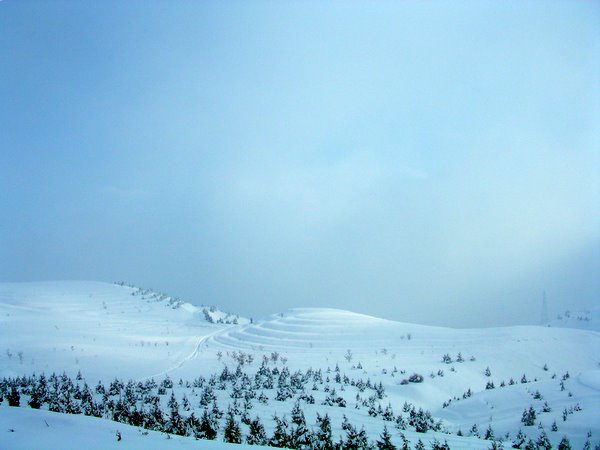
Can you believe that a short car ride north of Tehran you can be in the mountains hiking in deep snow? Wish I could ski...

Snow!

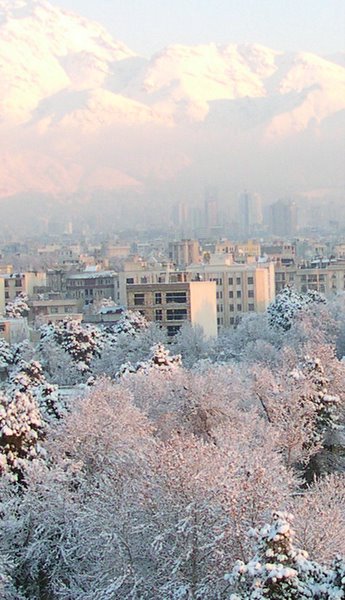
Sunrise in Northern Tehran. Gotta' love that snow.

Negotiation

Tagged as:

…Spent the week watching K negotiate a relatively small contract with Iranian vendors. The days were filled with offers immediately rebuked, prices rising 20% in a matter of hours, and general miscommunication, subterfuge, and ambiguity.

“Why didn’t you just send them packing?” a European friend asked us when we described our week to her.

“We were agreeing,” K explained. Our friend gave a knowing laugh.

Finally a contract was signed. Everyone seemed happy.

The next day the signatory an K were in a meeting. “I need 3 weeks more to complete the project.”

“You signed the contract.”

(3-hour discussion boiled down to 2 sentences.)

The signatory broke the contract, and it all started again with someone new…

So when we heard Jack Straw say that the Iranians were the most difficult negotiators he had ever dealt with, all we could do was laugh.

Thursday, January 26, 2006

Taxi Talk

Tagged as:

Got into a car that smelled like cat pee… I imagined that the windows were left open one night and Tehran’s cats made use of the car.

We passed a fancy hair salon for men with wall length headshots of long haired men. “I’ve never lived anywhere else where men were as fussy about their hair,” I commented.

“Hey,” said K, “it’s all we’ve got.”

“If you go to South Tehran with that kind of hair, you get arrested,” our driver told us. “Too much gel and they get you. We have no freedom.”

That got him started…
“I don’t understand why we are making all this fuss about nuclear energy. We have bombs with anti-Israel slogans painted on them and we want to know why Israel is afraid of us having nuclear capabilities. I cannot understand why our two countries are not friendly in the first place. We were friends. We Iranians have nothing against Israel. Why do we have to pretend that we do?”

I am thinking that my Persian is failing me. I just sit and let the driver do all of the talking. When we get out of the car, I ask K if I understood him correctly. “You did,” he tells me. “A lot of Iranians feel the way he does.”

The day before an accountant told me that Israelis were crazy. “Don’t you agree?”

“Well, given the fact that so many of them were born in Iran, I would say that if they are crazy you are crazy.”

“You got me,” he admitted.

Iranians are so baffled by the world’s response to AN’s anti-semetic comments. I have said this over and over: they have no idea of the true history of World War II. They never heard of the holocaust. They cannot understand the emotional/historical impact of AN’s rhetoric. Frankly, most Iranians cannot understand why the rest of the world pays attention to AN when they themselves do not.

P.S. Thanks to Troy Z. for this link . Great insight...

Wednesday, January 18, 2006

There is a mouse in the wall and it has ears…

New Persian lesson of the day… In Iran it’s not that “the walls have ears,” but that "the mouse in the wall has ears…"

I was speaking with a group of Iranians about nothing in particular and learned that saying as well as this one: “He left his hat backstage…” which is what you do when you lose control of a situation.

My “teachers” were calling me Miss America. “I just cannot remember your name,” the ringleader explained. “I hope you do not mind being called Miss America.”

“Why don’t you invite Bush to visit you here?” One asked me.

“Do you really want a visit from Bush?”

“I think if Bush came to Iran, he would see what a peaceful people we are and he would put the whole world’s minds to rest. Don’t you agree?”

I laughed. One of the group added, “When you do not visit Iran, you think we are an awful people… that we are terrorists, right?”

“Right,” I agreed. “That is the way the world sees you.”

“But we are nice. We do not want to fight anyone. We are peaceful.”

“You are,” I agree.

Iranians are worried about being bombed. Many are already making predictions about where. Apparently housing prices have dropped in a certain neighborhood of Tehran.

Oprah

Tagged as:

I caught an episode of Oprah when her guest was Jamie Foxx. Laughed a lot. My host said to me, “This is what gives life: a comedian. This regime just wants to make us cry all the time. They want to take away our laughter.”

The next day, I was in a taxi. The driver said to me: “We never laugh anymore. All we do is cry. That’s all we are allowed to do.”

“Don’t you watch Barareh Nights?” I asked.

“You got me,” he answered. “That *does* make me laugh.

Barareh Nights is the current rage on Iranina tv. It is really stupid if you are not familiar with current Iranian culture. If you are, then it is funny: the ridiculous accents, the silly scenarios, the jealousy, bribery, and petty vindictiveness. It’s all funny. JIGGAR… (that last endearment is for my Iranian readers...)

Lotsa Snow

We watched as the snow just fell and fell and fell. For days it has been so overcast that you could not see the mountains a few miles away (thank god it was not pollution blocking our view). For two days now, we have had sun which has has revealed the white moutains surrounding Tehran. (I promise to post pics) There are lots of tall pines in Tehran, so it did not take too much snow to make the northern and colder part of the city look like a Christmas postcard.

All this and nuclear negotiations too! For 2 years I have been arguing with Iranians about their nuclear ambitions. Sharon’s stroke has provided me with yet another argument. You’ll note that Sharon is being treated in a hospital in Jerusalem, not in Paris or Berlin or New York. Which head of state in the rest of this region would receive critical care within his own country? Iran has great doctors, minimal medical ethics, little investment in infrastructure, and almost nothing invested in research. Yet, the official line is that the West is keeping them from “scientific” research. Iran could have brilliant, groundbreaking medical research and medical care if the priorities were on healthcare instead of proving to the world they can do something the Americans did 60 years ago.

All the n-bomb does is bring you more enemies.

Sunday, January 08, 2006

Isolation…


I need to reopen the conversation on isolating Iran through sanctions. Let’s start with this presumption: the mullahs are not going anywhere. They will not be overthrown or pushed out because of a few puny sanctions. In fact, the political-fundamentalists among them will be strengthened by sanctions because it will mean that most of the population will become dependent on their good graces. Sanctions also mean that the group in power will become the lone voice inside of Iran. It’s already hard enough to have any diversity of opinion.

The regime welcomes the threat of attack. The only way for them to unite is against a common enemy. Unity is what they long for. Unity is what they do not have. Achieving unity presupposes a common enemy.

So, isolating Iran plays into the hands of the political-fundamentalists by making them an even stronger voice in this country and by giving them an enemy. Hurray.

Iran is not waiting to become America or Europe. Iran minus the regime does not equal freedom or democracy as much as Iranians would like you to believe. You need to have a public debate and free speech before you get democracy. That’s a lot harder than it might sound.

The publicly sanctioned arguments are those of degrees here in Iran. They do not represent true opposition. Those involved meticulously filter the voices that get heard. When they fall out with those in power, their voices are also filtered. Lo and behold! They are surprised that after a career of keeping others quiet, they can longer be heard.

Wednesday, January 04, 2006

I am a "cosmopolitan"

Hurray! A category for me.

Taxi Talk


(Visual: Driver, big bear of a man in his late 50s. Close-cropped white hair. Expansive smile.)

Me: “Wow. There is so much traffic today.”
Driver: “It’s all from British intelligence. It’s their way of disrupting our lives.” (jokes)
K: ”It’s a good thing my wife is American.”
Driver: “We wish the CIA was here tying up traffic. Long live the CIA! When are they getting here?”

Perhaps he was secretly referring to the goldmine of information provided by the CIA itself: [CIA Gave Iran Bomb Plans, Book Says]

*****

(Visual: Driver small bear of a man, young: early to mid 20s; close-cropped dark hair, goatee.)

Driver: “Islam is not our religion. We should all be Zoroastrians. That’s really ours. We pray in Arabic! What language do you pray in? I am sure it is not Arabic. Can you imagine the imposition of this religion on our culture?

Actually, I can. That’s the way the world works. But I keep my mouth shut, and he continues:

“How would you feel if your husband took another wife? I’ll tell you that I would never approve of my wife taking another husband! Why should she be happy if I took another wife?”

*****

(Visual: Driver, small, thin, older: maybe early 60s; white knit cap on his head typical of village men, grey wool suit coat)

Driver: “Our country has really fallen apart. We have no freedom, no nothing anymore.”

Me: “I always wonder what people mean when they say ‘freedom’?”

Driver: “We were freer during the time of the Shah. We were going to be more free. At least we could drink and women could wear whatever they wanted. Now we can’t even do that. Now women wear almost nothing because they are forced to wear hijab. Sometimes I think it would be better for women to walk around naked than to wear what they wear now. There is too much pressure. All of our lives are lived under pressure.”

Monday, December 26, 2005

Merry Christmas and Happy Chanukkah and Happy Longest Night


Sorry for the radio silence. I had internet problems and anger management problems.

I have never had so many Christmas invitations before…Brunch here, lunch there, dinner somewhere else… Little plastic Christmas trees, revolutionary guards with kalashnikovs roaming the streets, and snow in the mountains! On Christmas eve, we even had a visit from a skinny Santa Claus.

Last year I wrote that I believe that in the coming 10 years Christmas will become a full-fledged holiday in Iran. This year was even Christmasier than last. Not one of our Christmas invitations has come from a Christian. Iranian state radio even wished Christians a merry Christmas and played Western music. (AN himself used the theme song from Bonanza in his campaign clip)

I love it when Iranian Muslims ask me what is traditional for Christmas: “Chinese food & a movie,” I answer. Of course, they don’t get it…Fortunately another foreigner could answer: “Alcohol.”

In the holiday spirit… here are a couple of jokes:


A joke:
Bush, Chirac, & AN pay a visit to God to see what’s in store for them in the coming year. First Bush:

“I’m afraid I have bad news for you,” God tells him. “Things are not going to go so well in Iraq. The public is going to lose its faith in you. You’ll have horrible hurricanes one after the other, and the republicans will lose the election.” Bush left crying.

Then Chirac:

“The news for you isn’t so hot either. You’ll have riots in the streets. Thousands of cars will be set on fire, and everyone will blame you.” Chirac, too, leaves crying.

Then AN:

“And what’s in store for my country?” AN asks. God hesitates a moment and then starts crying himself.

Another joke:

In a country where fish fall in love and turtles fly, it’s no wonder a monkey is president.

Oh and more humor...

Blocked on my side, but I bet you guys can read this: "How about transferring Israel to Iran." Hey... I laughed.

Monday, December 12, 2005

Earlier the day of the crash…


Waiting for a telephone line to be connected in Tehran means entering a strange world of bizarre excuses and broken promises. If you don’t know someone in the telecom office and then if you don’t grease his palm, you are guaranteed horrific service. If you do know someone that you can appropriately “tip” then you just get bad service.

After several broken promises, we were told: “The guy who can connect your phone had a death in the family.”

I found that I could not be sympathetic. “Iranians always have a death in the family,” I responded. “It seems to be a favorite excuse.”

Everyone laughed.

Later that day, we ordered pizza to be delivered. It arrived an hour late and cold. When we called to complain, the manager told us that his delivery person had just died.

Again we laughed.

It’s sad isn’t it? You get to a point here where the news just keeps getting worse and worse and you have no way of controlling it. Sucks, right. You just laugh. And then a few hours later the news is even worse.

Plane crashes, pollution, & other every day occurrences.


Iran is deep into its second week of horrific pollution levels. Schools and offices closed last week in an effort to reduce Tehranian’s mobility needs and therefore reduce the pollution. No such luck. It just keeps getting worse. There is no rain, no wind, no nothing. I am starting to feel like someone has been standing on my chest, like I am caving in.

In the midst of all of this, a military plane crashed with 68 journalists on board. The pilot did not want to take off. He was ordered to do so. This is a scandal. (See idiotic graphic on IRNA’s site. Note that tulips are the symbol of the martyr. Martyr to what? Irrational decision-making?) Mr. Behi expresses the common outrage.lThe uncommon outrage is that it is America’s fault because of sanctions. Well, there are sanctions against obtaining nuclear capabilities and Iran seems clever enough to get around those. Also check out the BBC’s report via regimechangeiran.

Our friends have been attending a lot of funerals. Many of them knew people on board. I wish them well.

Ahh… but the pollution is the lasting disaster. When will it end?

Monday, November 28, 2005

Taxi Talk

Tagged as: ""

Bad traffic. Our 20-minute trip in heavy traffic became a 45-minute trip in heavier traffic. Who knows why?

Our driver: tall, silver flecks in black hair. Black shirt. Big prayer ring.

He began by complaining that foreigners were screwing up the economy.

“Why do you say foreigners? We do it all ourselves,” K said. “What other country gives inexperienced and immature people such positions of power? Would you let a 12-year old manage your investments?”

“He might be a smart kid,” the driver joked.

“Yeah, but he puts all your money into candy.”

“That’s may be true.”

“All over the world, Iranians are successful. Let’s not even talk about engineers or doctors,” K said, “there are Iranian architects, Iranian designers, Iranian pop stars, Iranian journalists. Just look at CNN! But here: we can’t be successful at anything. We have everything; every talent; everything we need to be successful, and then a bunch of immature and inexperienced leaders.”

“What about Clinton? He was young when he became president.”

“The difference between a young Clinton and a young guy here goes from the ground to the sky. Clinton goes from high school to college to work. He builds his experience step-by-step. He doesn’t go from basij to oil minister in one step, does he?”

“But the West is always trying to influence us,” the driver added.

“Oh, and aren’t we trying to influence Armenia and Iraq and Afghanistan? That’s the way the world works.”

Later in the conversation…

“I was a member of the Basijee,” the driver tells us. “But it soon became clear to me that it was just a group of people out for revenge. They told me, go and get your revenge, but I told them: why should I do that? I joined because I believed in Islam and the revolution. All those guys believed in was vengeance.” (After the car ride I asked K why he kept talking about throwing bricks. K explained that that meant “taking revenge.”)

“What religion tells you that it’s okay to lie, cheat, and steal? Here in Iran, you cannot function without lying, cheating, or stealing.”

“This is not Islam,” the driver says. “This is its opposite.”

Wednesday, November 23, 2005

Opip - an observation post: Conversation with Nasser Zarafshan

From Opip's Blog an interesting interview. I know I was late finding it, but that doesn't make it any less interesting:

Conversation with Nasser Zarafshan

Under the title „Tehran’s reformist mask has come off“ the German newspaper „Junge Welt“ published an interview with Nasser Zarafshan on Saturday.

Dr. Zarafshan acted as a lawyer to the relatives of Iranian writers assassinated in the ‘serial murders‘ (more on the serial murders), when he was himself arrested in 2002. He has been in prison ever since. In June he went on hunger strike to protest his detention. During the summer he was shortly transfered to a hospital to undergo treatment for kidney stones.

Saturday, November 19, 2005

Isolating Iran is what the Fundamentalists Want


First the comment:
Anonymous said...
Ah, if only Americans could finance microbanks in Iran the evil regime would be less secure.

Sorry, the NY Times editorial is the usual Times pap about how the world be great if only we were all nice to each other and that it is always America's fault if we are not.

The Iranian regime is serious about the systematic destruction of the West. It even says so itself. Isn't that what Death to America means? Helping the Iranian people unfortunately means helping the regime. We are better off withholding our help.


My response:
Now you are thinking like the fundamentalists in Iran! You guys agree. They don’t want out help, and you don’t think we should give it.
Fundamentalists strive for isolation. Their goal is to isolate Iranians from the rest of the world: economically, culturally, and intellectually. They are itching for a fight. Sanctions and strikes would help build their power base.

Believe it or not, the Iranian regime is not 100% fundamentalist. There are dissenting voices that want to keep Iran and Iranians engaged in the world. Iranians themselves are far from 100% fundamentalist. And, guess what, they are overwhelmingly pro-American.

Sometimes I think Iran is like a tube of toothpaste. The regime just keeps squeezing people so that they leave or lose the will to fight.

Read “Soldiers of the Hidden Imam” by Timothy Garton Ash

Saturday, November 12, 2005

Sex Appeal

A friend of mine is convinced that Westerners are erotically obsessed with the hijab. “They love the photograph of the chadori with the rifle and the basij headband,” she raves. “It turns them on. I swear.”

Maybe. After all the “adult” shelves are filled with nun fantasies… It’s the same outfit more or less.

We had dinner with a couple vacationing in Iran. “This is how much the whole hijab thing affected me,” the man told us. “After just one week here I felt like a twinge of excitement watching a strange woman take her headscarf off when we would come inside a house. I felt like such a voyeur. I was constantly trying to imagine what the women were wearing under their hijab. Tell me what was it?!”

“A spaghetti strap, skin-tight top and stretch pants,” I answered.

Returnees

GM from San Francisco sent a link to this article in the Jerusalem Post: “Exclusive: Immigrant moves back 'home' to Teheran”

"I have a lot of Muslim friends and they all knew I'd moved to Israel," he said. "They asked me, 'Why did you come back?'" His Jewish friends in Iran already knew the answer.
Despite the declaration last week by Iran's president Mahmoud Ahmadinejad that Israel must be wiped off the map, the Shihab missiles displayed in Teheran with "Israel" painted on them, the broadcasting of anti-Semitic films on national television and the much-publicized trials of 13 Jewish Iranians on spy charges, Ishak insists that life in Iran is far better for Jews than life in Israel.
"If you have problems there, people help you - and they know you are Jewish," said Ishak, who has now briefly returned to Israel to sell his shop and leave for good. "But here, everyone is looking out for himself. You can't trust anybody."

Is it nostalgia? True? Or the interactions of a minority? I don’t know. I do know that when you are part of a minority, you get accustomed to a certain type of group behavior that is decidedly un-majority. I often wonder what happens to Iran’s Christians when they find themselves in majority Christian countries like America. Are they excited to be part of a big majority or do they retain the characteristics of a minority group. Any Armenians from Iran out there who want to respond?

Sunday, November 06, 2005

Telegraph | News | Suicide bombers on Iran kids' TV

"Ahmadinejad is not a shrewd political operator," said Dr Ansari. "Most Iranians want to focus on domestic problems and this [his anti-Israeli stance] is alarming the international community and creating huge anxiety in Iran."

A British diplomat in London said: "The increase in anti-Israeli propaganda and Ahmadinejad's dangerous rhetoric will only serve to alienate him from his people and further isolate Iran. For the West, as well as Israel, the prospect of this man having his finger on a nuclear button is truly horrifying."">Telegraph | News | Suicide bombers on Iran kids' TV: "'Ahmadinejad is not a shrewd political operator,' said Dr Ansari. 'Most Iranians want to focus on domestic problems and this [his anti-Israeli stance] is alarming the international community and creating huge anxiety in Iran.'

A British diplomat in London said: 'The increase in anti-Israeli propaganda and Ahmadinejad's dangerous rhetoric will only serve to alienate him from his people and further isolate Iran. For the West, as well as Israel, the prospect of this man having his finger on a nuclear button is truly horrifying.'"

Thursday, November 03, 2005

Our Allies in Iran - New York Times

Great op-ed by Afshin Molavi.
Our Allies in Iran - New York Times:
"Iran's modern middle class, which is increasingly urbanized, wired and globally connected, provides particularly fertile soil for these aspirations. The Stanford University scholar Abbas Milani has described Iran's middle class as a 'Trojan horse within the Islamic republic, supporting liberal values, democratic tolerance and civic responsibility.' And so long as that class grows, so too will the pressure for democratic change.

If Mr. Ahmadinejad's foreign policy results in further global economic isolation or military intervention, however, the situation for Iran's democracy-minded middle class could deteriorate. Foreign hostility will furnish additional pretexts for the regime to frighten its people and crack down on dissent. Particularly if the European Union decides to participate in a tougher sanctions regime, liberal-minded Iranians will lose contact with the foreign investors, educators, tourists and businessmen who link them to the outside world.

Now more than ever, middle-class and other democracy-minded Iranians need to preserve and expand their network of institutions independent from the government - institutions in which they can take refuge from the rapacious hardliners who seek to control all aspects of Iranian life. That network should include a strong private sector; a rich array of nongovernmental organizations dealing with issues like poverty, women's rights and youth unemployment; and social, intellectual and cultural associations that communicate with counterparts abroad.

Unfortunately, United States sanctions now prevent any American person or group from financially supporting, say, a microfinance bank, a program to train future political leaders or even an education initiative for rural women in Iran. That is a mis- take. Elsewhere in the Middle East, the United States has programs that provide exactly these kinds of grants, in the name of democratization."

Eid is tomorrow…

Update: Welcome to View from Iran...If you feel like it, stay and read a bit.

I know that a lot of people are coming to this site for info on Eid 2007 in Iran... Eid-eh Shoma mubarak. I heard that there will be only one day of Eid this year, but who can be certain? Last year's 2-day celebration was a complete fiasco!

In Amsterdam, where we are now, the streets are filled with Muslims eating ice cream and sweets. Hope you are enjoying yourselves everywhere.


Woke up to stripes of snow on the mountains, rain-charged air, and fantastic after-rain light. It was the happiest I’ve felt in ages.
The end of Ramadan has been announced.
Rumor has it that AN is recalling ambassadors. Will they actually come back? Time will tell.
I do not have a clue about what is going on. The Iranian stock market is crashing. People are not making purchases. Iranians are preparing for sanctions. The regime is preparing for war.
No one wants sanctions… except, perhaps, the hardliners (which hardliners? I am sure there is a faction of hardliners that would prefer not to have sanctions.). Sanctions will be a boost for the hardliners who get stronger on depravation than they do on plenty.
AN promised economic reforms. How will those promises be met with sanctions? I was riding in a taxi when 20% pay raises were announced. “The prices have gone up 40%, but our pay is only going up 20%,” the driver told me. “You need 1 million tuman a month to have a life in Tehran, but all I make is 200,000.”
It’s hard to believe that the rial was ever worth anything.

Tuesday, November 01, 2005

Jee zuee, what the f***?

Tagged as

The differences between the reformers and the conservatives seem tiny when compared to the differences between the hardliners and the hardliners. The reformers just wanted a kinder, gentler Islamic government. What do the hardliners want? You tell me.
I’m serious. Tell me.
I was riding downtown when I saw the giant posters “World Without Zionism.” A couple of days later, AN makes his firebrand speech. I am so sick of anti-semites (you know I don’t mean Arabs, right folks?) pretending that they are just anti-Zionists. Jezuee, you do business with the Russians for f***’s sake. Oh yeah, and the Chinese.
The weird thing is that most Iranians would be shocked to discover that the rhetoric of their various leaders makes me, at times, physically ill. They would never take it as seriously as I do.
They laugh it off. And I do not want to find out more. I do not want to know if they find AN brave (like a friend told me that many do) or honest or whatever. The Iranians I have met rarely make any connections between their hatred for Israel and anti-Jewishness. Jews are, after all, people of the book. The children of Ibrahim. Right?
Of course, many of the Iranians I have met have never heard of the holocaust. They still appreciate the Germans for fighting those evil Brits. They know next to nothing about World War 2.
Ramadan should be a spiritual time for Muslims. Right? But every fucking year, all over the world, it is used as a time for increased holy violence and vitriolic speech.
This year I stayed away from all Iranian media. I knew that if I watched it, I would be subjected to too much casual hatred.
But, like last year, I am sure that the day after Ramadan, everything will be back to normal. The vitriol will get watered down. Rafsanjani claims that the leader agrees that Israel should not be wiped off the map. If that’s true… what’s next from here?

Wednesday, October 26, 2005

Rosa Parks

Yes. Rosa Parks. I always admire her for the woman behind the myth: the one who was active in the NAACP and the Women’s Political Council; the one who was one of many women looking for an opportunity to get arrested for not giving up her seat. I admire her for not just being tired, but for being organized.


Recalling the incident for "Eyes on the Prize," a 1987 public television series on the civil rights movement, Mrs. Parks said: "When he saw me still sitting, he asked if I was going to stand up and I said, 'No, I'm not.' And he said, 'Well, if you don't stand up, I'm going to have to call the police and have you arrested.' I said, 'You may do that.' "
Her arrest was the answer to prayers for the Women's Political Council, which was set up in 1946 in response to the mistreatment of black bus riders, and for E. D. Nixon, a leading advocate of equality for blacks in Montgomery.
Blacks had been arrested, and even killed, for disobeying bus drivers. They had begun to build a case around a 15-year-old girl's arrest for refusing to give up her seat, and Mrs. Parks had been among those raising money for the girl's defense. But when they learned that the girl was pregnant, they decided that she was an unsuitable symbol for their cause.
Mrs. Parks, on the other hand, was regarded as "one of the finest citizens of Montgomery - not one of the finest Negro citizens - but one of the finest citizens of Montgomery," Dr. King said.

Sunday, October 23, 2005

Ramazan Ramadan

Tagged as:

We’re about halfway through the mandated public fast. You can’t eat or drink in public unless you are a traveler or are sick. And then you better be in a hotel or a hospital. So imagine my joy when I was offered tea at a recent meeting. What a pleasure it was!

I think that many more women than men fast. “They think it will help them lose weight,” a friend explains. I’m not so sure. There is a kind of community that the fasting creates. It really is a pleasure to wander the streets at sunset. Someone is always out offering sweets, fruit juice, or porridge. Everyone watches the same serial: the story of a woman possessed by the devil. I have only caught bits and pieces because I do not have an antenna. Got one today, but now I only have 2 channels.

“Islam should be left to the individual,” a taxi driver ranted yesterday. “All of this fake fasting and public sanctions are ridiculous. They have taken away our personal relationship with the religion and made it the law. It’s too much.” And on and on and on he went…

“Wow. He talked a lot,” I told K.

“One thing’s for sure: he wasn’t an intelligence officer.”

“He didn’t give us any time to talk,” I laughed.

Thursday, October 20, 2005

It can’t get any worse...

Oh yeah? I can think of thousands of ways that things can get worse. There is no rock bottom, I can guarantee that. There are only ledges on the way down. Get yourself on one of those ledges and hope that you can pull yourself up.

I have been accused of being biased against Iran by one of my recent readers. I think that if you read the entire site you will see it is 100% bar aks (opposite). I am in a funk now. When you get in a funk, everything goes wrong. Here’s a small list: crazy, vindictive landlords who want to get us arrested for giving notice; broken promises; missed deadlines; bad communication; out and out lying and purposeful misunderstandings; hospitals and death. Oh and politics. There is always that when you can’t find anything else to depress you.

“We are borderline clinically depressed,” K told me this morning. “I saw a program that described all of our symptoms.”

Us and just about everyone else in this country…

“Many of our friends are leaving the country,” a friend tells us. “They feel like the last eight years were a sham – that we are back at square one.”

“They have discovered 300 million dollars of corruption in the oil ministry,” K tells me.

“They’re scratching the surface.”


I remember before the war with Iraq when reporters and blogger" were saying that Iraq was not preparing for war at all. Iraq did not prepare for a war that most believed was inevitable. On the other hand, rumor has it that Iran is preparing for war: a war that most believe is, in fact, unlikely.

They are dragging out the negotiations: giving themselves time to build relationships with the Russians (oops! Soviets! Or uhhh Russians) and the Chinese and god knows what else. Some Iranians I speak to believe that the regime will eventually come to an agreement about the nuclear issues, but I am not so sure. Why would they come to an agreement with the EU and US when China doesn’t care about their nuclear ambitions or their human rights record?

“All of our clients are from China,” a lawyer tells me. “We don’t open the doors for Iranians even. They are never satisfied with our work; they call at all hours of the day and night; they don’t like to pay; and they are inefficient. Our Chinese customers love us. They have money. For them, we are cheap.” (The lawyer wasn’t commenting on foreign policy, nuclear power, or anything else but his business.)

On the other hand, there seems to be a shrinking sense that nuclear arms will make Iran more respectable. What could be causing this diminishment of enthusiasm? Could it be that most Iranians wanted to believe that the nuclear program was, indeed, peaceful? Could it be that they are now realizing that it is not entirely peaceful? Could it be that the regime may be thrilled with its new-found friendship with China, but that most Iranians look to the West when they see their future? Could it be that Tehran’s metro construction has struck water and caused the near collapse of a busy street?

Wednesday, September 28, 2005

Millions of brilliant liars

"After the revolution, my friend tells his kids: 'Look, don't tell anyone at school that I drink vodka.' Later they got a satellite. Once again, he tells his kids, 'I know we have a satellite, but don't tell anyone at school that we have one.' When his kids are teenagers he discovers that they lie to him all the time, and most of the time he does not have a clue. 'How did you get to be such good liars?' He asks his teenage children. 'You taught us,' they answer.

Millions of parents just like K's friends. Millions of brilliant liars. That's what the revolution has produced.

When you first arrive in Iran, people tell you: "Don't trust your own brother." You don't believe them. How could these people be so frigging cynical? You might ask yourself.

Today some guy told me: "Adapt, don't conform." Iranians, he explained, conform. That's what makes them so frustrated and so depressed. "We have a history of conforming," he tells me. "I adapt. That's why I have managed to maintain my sanity here."

Tuesday, September 27, 2005

Back in Town

Millions of Iranians have returned to Tehran which means the roads are packed and there is a disgusting orange cloud of smog covering the city.

School started a couple of days ago. Mornings are filled with the noises of children playing in the schoolyard before the first class starts. I like the sounds.

"Soon only the women will be educated," K tells me. "Guys just aren't making an effort. They don't see any benefit in pursuing an education."

Every year the percentage of young women attending university goes up. (I could add that critical thinking goes down, but that might be interpreted as an indictment of women rather than an indictment of the education system. The second is meant.)

"Young men have their daddies buy them stores and put them up in business. They think they can make more money that way than through an education."

We have friends in foreign-owned businesses in Iran that only have women working for them. "The men are just useless," they tell us. "We have almost no men working for us."
To be fair, the situation is more complicated than that. "Men in Iran believe that the women are making the regime work," K tells me. "After awhile, men here use inefficiency as a form of protest."

Yeah, yeah… maybe…

It's hard in Iran. People start out full of energy and ideas and slowly find themselves worn down and thwarted. It's enough to make anyone useless and inefficient.

Monday, September 19, 2005

Reality Bites

Tagged: and

"Iranians don't think because if they did, they would not be able to sleep nights." I can't remember who told us this. Somebody at some party somewhere, no doubt.

After many sleepless nights, I have learned the Iranian art of not thinking. Every once in awhile someone or some event forces me to think, and I find myself up nights with my eyes wide open trying to replace my anxieties with the memory of an episode of the Simpsons or by immersing myself in the plot to Michael Swanwick's The Iron Dragon's Daughter ( at Amazon: www.amazon.com/exec/obidos/tg/detail/-/0380730464?v=glance) When I am not successful, which is often, Bart and Lisa start to argue politics and predict Armageddon.

Oh well…

Predicting Armageddon

When AN arrived at the UN, the talk all over town (at least all over uptown) was of his clothing. I overheard a number of conversations about the president's appalling fashion sense. "Other leaders arrive looking clean and well-dressed, but our president looks like a mess. How could he dress that way in front of the UN?" This seemed to be the common refrain. Our friends confirmed that this was the topic of conversation everywhere they went. "If we were in South Tehran, they would probably be pleased. They're probably saying that he's just like us. He's a man of the people." Maybe.

Last night, we were up late discussing AN's speech and its possible effects. "Iran is overplaying its hand," a friend said. "They are underestimating America. They think America is weak."

And what does America think? If they think that an outside attack would lead to regime fall, than they are sadly mistaken. Does America think that we cannot let Iran get away with their nuclear shenanigans? And what does that mean?

Some Links:
(PDF file)A report from the Carnegie Endowment: (www.carnegieendowment.org/pdf/npp/iraniannuclearchallenge.pdf)

From Business Week: (http://www.businessweek.com/magazine/content/05_22/b3935148.htm)

Saturday, September 10, 2005

Tree-hugging Buddhist Republican

Tagged:

"You have to admit that the Americans never had any problems until the Muslims came along and bombed the World Trade Center," a self-described "tree-hugging Buddhist Republican" Iranian said at a dinner party last night.

The man sitting next to me looked at him with disbelief and said, "Vwhy, babba, we are the Muslims."

At this dinner we heard how fickle Americans are, how good they are, how short-sighted they are, how they want to spread democracy to the world, how there is no free speech in America, how America protects free speech, and how much America has changed since 9/11.

Later we actually talked about American football: you know the pigskin and all that… Turns out that our dinner party crowd were big fans of the Kansas City Chiefs. "My brother loves the team so much that he has started to refer to them in the first person."

"What do you mean?" I ask.

"He says things like '*we're* not doing so well this year. *We* are having a few problems with our defense…"

Never mind that Americans talk this way all of the time. It sounds funny coming from an Iranian.

Wednesday, September 07, 2005

Calling all bloggers writing about Iran: Tagging

Tagged:


I am going to start tagging posts. I hope that others will make suggestions for tags so that we can have some coherent way of identifying our posts. Please add suggestions to this post. I will keep updating it.

I suggest the following schema to begin with:


Here is the code. Replace the ?? with < and the !! with >

??a href="http://technorati.com/tag/iran+tagging" rel="tag"!!Iran tagging??/a!!

??a href="http://technorati.com/tag/Iran+celebrations" rel="tag"!! Iran celebrations??/a!!

??a href="http://technorati.com/tag/Iran+health" rel="tag"!! Iran health??/a!!

??a href="http://technorati.com/tag/Iran+election" rel="tag"!! Iran elections??/a!!

??a href="http://technorati.com/tag/Iran+politics" rel="tag"!! Iran politics??/a!!

??a href="http://technorati.com/tag/Iran+taxis" rel="tag"!! Iran taxis??/a!!

??a href="http://technorati.com/tag/Iran+daily+life" rel="tag"!! Iran daily life??/a!!

??a href="http://technorati.com/tag/Iran+work" rel="tag"!! Iran work??/a!!

??a href="http://technorati.com/tag/Iran+others" rel="tag"!! Iran what others think??/a!!

??a href="http://technorati.com/tag/Iran+culture" rel="tag"!! Iran culture??/a!!

Updates and Suggestions
From opip (http://www.opip.org/(w/some editing):

iran+foreign+policy

iran+us

iran+wmd

iran+religion


??a href="http://technorati.com/tag/iran+us" rel="tag"!!Iran: U.S.??/a!!

??a href="http://technorati.com/tag/iran+wmd" rel="tag"!!Iran: WMD??/a!!

??a href="http://technorati.com/tag/iran+religion" rel="tag"!!Iran: religion??/a!!

??a href="http://technorati.com/tag/iran+politics" rel="tag"!!Iran: politics??/a!!

??a href="http://technorati.com/tag/iran+ganji" rel="tag"!!Iran: Ganji??/a!!

??a href="http://technorati.com/tag/iran+opposition" rel="tag"!!Iran: opposition??/a!!

Monday, September 05, 2005

Home care, health care, and corruption

Tagged:

"My mom needs a shot. The doctor told me to get the medicine through my insurance, not through the black market. 'It should be about 20,000 tuman,' she told me. I tried all of my contacts: nothing. Nothing is available officially. On the black market, they're asking 450,000 a dose. I sent another guy after it. He got the price down to 390,000. Finally, a nurse was able to get it for me for 99,000."

Oil revenues are reportedly high. Iran is using about $1 bn to set up a love fund to help couples tie the knot and settle down. Don't ask the gov what it will do for people who are aging or suffering serious illnesses. Iranians already know: they'll have to fend for themselves. Word on the street is that a famous wrestler recently died because he did not have money for the medication he needed. I heard the manager of the hospital give a well-spoken rebuttal to the rumor, but even I did not 100% believe him. I believed the rumor.

Caring for yourself or for another requires the following:

Good health insurance plus lots of cash;
A team of supporters who advocate for you with the doctor and the hospital staff;
A team that gets you your drugs;
A caring family member who acts as your nurse;
Someone who can interpret your lab results;
Lots of cash.

Healthcare is Iran's Achilles heel. The population is overwhelmingly young, which means that healthcare will be pushed to its very limits in the coming years. Families are increasingly small, which means no single daughter who devotes her life to caring for her parents.

Expectations are high. Iranians know that their doctors are well-respected. TV and radio are chock-full of medical programs. People want to be able to take care of themselves, and they expect to be able to take care of themselves. They know that the money from oil is pouring in, and some of them are starting to ask why don't the hospitals have drugs? Why isn't the medication they need legally available? Why can't they get the care they deserve and expect? How did the medicine find it's way on to the black market in the first place?

Friday, September 02, 2005

Snow

Rain and thunder. The mountains are etched across the sky. The colors are amazing. And then: snow on the mountains! It really is beautiful.

That night, K and I sit on the balcony. The air is clean and cool. The sky is orange. Suddenly, Damavand's triangular peak makes its appearance. The snow that covers it reflects the sun so that you see this dramatic, orange cone.

"Tehran is so beautiful," K says.

Sometimes I feel as though I have lived the Prague Spring. I remember conversation from some movie I saw about Prague (what was it?). The characters are in a jazz club. The Soviets are threatening. "The West would never let them reinvade," one of the characters says.

I still get heartsick when I think of that 1-minute of film.

The announcement of the cabinet means that many Iranians have had their worst fears realized, yet they continue to hope for the best, whatever the best means.

Friday, August 26, 2005

Tips for Journalists Visiting Iran

After living here for two years, after reading countless articles about Iran, after viewing news spots and listening to radio spots about Iran, I want to offer a few quick pointers to journalists coming to Iran.

Tarof:
Tarof is a complicated system of manners than can make it extremely difficult for a visiting journalist to get a straight answer.
a. Iranians would rather agree to do something than to admit that they cannot help you.
b. An initial "no" or "yes" should not be taken seriously. If permission is not granted initially, keep asking. It pays to be persistent.
c. Most Iranians you meet will invite you to their homes. If you agree to go, please understand that your visit may cost them a lot of money. They might not really want you to come. It might be too expensive for them.
d. If an Iranian invites you to a party where alcohol is served, you might want to remember just how expensive that alcohol is. They may love to see you, but resent the amount that you drink. Try to show some restraint. A case of beer costs 70,000 tuman. Cheap, brand name whiskey costs 50,000 tuman. This is not cheap even for a westerner. Imagine what it means to an Iranian.

Outside/Inside:
This is a kind of addendum to tarof. The biggest cliché in the world is that the Middle East is a veiled society where there is a strict dichotomy between outside and inside behavior. (I know, I know, Iran does not consider itself part of the Middle East. Is a region unto itself.) Just because it is a cliché does not mean it's not true. Please take it seriously.

a. Take everything presented to you with a shaker of salt. Take context into consideration. Ask yourself, who else is listening? Who else is observing? For example, when an anti-American speech is made on the anniversary of Iran's revolution, don't forget to mention the occasion in your reporting.
b. It's hard to get to know Iran and Iranians unless you marry into an Iranian family. Don't be fooled by appearances.
c. Go to any funeral or wedding that you get invited to. Funerals do not require invitations. Your presence at one would be welcomed.
d. Most Iranians in exile do not know anything about Iran as it is today. Don't depend on them for information unless they still have family in Iran and have traveled here in the past two years.


Exaggeration:
a. Iranians are prone to exaggeration. All Iranians.


Northern Tehran vs. the rest of Iran:
a. Take any opportunity to get out of north Tehran. Talk to people who are neither wealthy Tehranis nor fundamentalist Islamists. Find the middle ground. How big is it? I have no clue myself.
b. If possible, opt for an intercity bus when traveling out of Tehran. Talk to your fellow-travelers.
c. Don't stay in a protected bubble. Your hotel, your friends or friends of friends, and most of the people you are meeting have little to do with Iran or Iranians.

Gender Roles:
There is no one more privileged in Iran than a western woman. If you are a woman, don't pass up the opportunity to come here.

For women:
a. Do not be offended if a man does not shake your hand or look you in the eyes. Don't let it make you feel anything at all.
b. Shake hands with anyone who offers his/her hand. (For men as well)
c. Don't over dress. Iranian women expect you to push the boundaries of hijab regulations.
d. Style is key. Don't let the Islamic dress code make you look unstylish. Practice wearing a scarf before you get here. Buy a fashionable jacket that covers your ass. Look good.
e. Go to as many all-women events as you can. Try to talk to women without any men around.

For men:
a. Shake hands with all of your female colleagues and all women who offer their hands.
b. Don't be fooled by women who are demure in front of men.


Tolerance:
More than once, I have seen reporters refer to the supposed religious tolerance of reformist clerics. When a cleric expresses his tolerant views, please ask him these questions:

a. Does this tolerance refer only to the "people of the book" or does it extend to the Bahai, Hindus, and Buddhists (to name just a few?)
b. Does tolerance refer to Muslims who convert to other religions?
c. What about aetheists?

Hijab:
Many Iranian women struggle to assert their own personality through their hijab. Strangely enough, style *is* a form of protest. Style, however, is a function of class. Wealthier women can afford to flaunt dress codes because they can afford to pay any fines that they might be saddled with as a result. Poorer women are more subtle because the fines would be impossible to pay and because their families commonly exert more pressure on them to conform to Islamic dress standards.

Chadors are the big black capes that women wear over their heads. Manteaus are the jackets women wear. Please keep the two separate.

Government employees are required to wear chadors. Not all of these women would choose this form of dress for themselves.

Wednesday, August 24, 2005

A (naïve) case for (modicum of) Irano-Israeli rapprochement

Interesting post from the Brooding Persian...

I am still puzzled by the curious silence which shrouds Mr. Katsav's recent personal peace appeal to Iran. I think we might have a real opportunity here to win some much needed time and breathing space to set our houses in order. I know this is a thorny issue. But I am going to make a case for having the Europeans find a way of linking the future of Iranian nuclear aspirations to some degree of direct engagement between Iran and Israel.

The relations between these two nations have ancient roots. I know the affairs have been a tad more complicated in recent past, with revisionists on both sides hard at work projecting the present animosities backward in time in order to provide even more justification for the ongoing campaigns of hate and venom.

Yet, the fact remains that some ancient nations are tied at the proverbial umbilical cord. There have been positive interactions and mutual influences over countless centuries as attested to by what little scholarly work exists that map out the history. Much work remains to be done, of course, given the vast quantities of material available still that has remained unexplored by the broader academic community.

As an aside, I have noted once before what a magnificent tradition of Judeo-Persian literature exists which is simply astounding and that you should get familiar with it if you are not already. And in one recent work (I have yet to examine) we get a glimpse into the life of our Jewish compatriots over the years. Some pictures here. ">Brooding Persian: 08/01/2005 - 08/31/2005: "I am still puzzled by the curious silence which shrouds Mr. Katsav's recent personal peace appeal to Iran. I think we might have a real opportunity here to win some much needed time and breathing space to set our houses in order. I know this is a thorny issue. But I am going to make a case for having the Europeans find a way of linking the future of Iranian nuclear aspirations to some degree of direct engagement between Iran and Israel.

The relations between these two nations have ancient roots. I know the affairs have been a tad more complicated in recent past, with revisionists on both sides hard at work projecting the present animosities backward in time in order to provide even more justification for the ongoing campaigns of hate and venom.

Yet, the fact remains that some ancient nations are tied at the proverbial umbilical cord. There have been positive interactions and mutual influences over countless centuries as attested to by what little scholarly work exists that map out the history. Much work remains to be done, of course, given the vast quantities of material available still that has remained unexplored by the broader academic community.

As an aside, I have noted once before what a magnificent tradition of Judeo-Persian literature exists which is simply astounding and that you should get familiar with it if you are not already. And in one recent work (I have yet to examine) we get a glimpse into the life of our Jewish compatriots over the years. Some pictures here.

Tuesday, August 23, 2005

SEAN PENN IN IRAN

I'll join Iran bloggers everywhere and link to Sean Penn's series in the SF Chronicle.

One of our young friends received an email full of pics of Penn on his recent trip to Iran. She assumed that they had all been faked and could not understand why he would come here.

Well, it's an interesting country...

Monday, August 22, 2005

Down with Germany! Down with France!

Flew back into Tehran. Paid too much for a cab. Well, just about 20 cents too much. I guess I can live with that. My driver has the radio on. The news. Reporting on Friday prayers. Chants of Khameini! Khameini! Khameini!

Subject of sermon: nuclear power, AN's cabinet, and the usual "down withs:" Israel, America, England…Plus 2 new ones: Germany and France. Welcome to the club!

"What do you feel when you hear 'Down with America'?" My driver asks me.

"Frankly, I don't like it. But it does not bother me too much because no one has ever been rude or insulting to me. Even the Basiji are polite and friendly when they find out I am an American."

"We are a hospitable people. You won't meet a more hospitable people anywhere in the world."

Maybe not…

The driver's brother lives in San Jose, California. His sister lives in Germany. His other brother is a fisherman in Bandar Abbas.

Get home. Friends greet me. Sleep.

Saturday, August 20, 2005

Mourning

No one would ever call an Iranian stoic. In fact, you might say that Iranians have a trembling lower lip rather than a stiff upper lip. Mourning is expressive and public and shared with friends, relatives, acquaintances, and colleagues.


Until you've been to an Iranian funeral, you know nothing about the culture. And until someone you love dies, you can be nothing but an interested observer.

This past week, someone I loved died. I was not the only one who loved her. She was one of those people who just get under your skin. Perhaps it is because of their own comfortable relationship with themselves, who knows? But from the first minute I met her, she was like family to me. She always seemed to understand my difficulties adjusting to Iranian culture and especially to tarof. Even before I could speak a word of Persian, we managed to share jokes and stories. I cannot tell you how we did it. I used to marvel at it myself. Sometimes we would talk for hours. She in Farsi and me in English. We never seemed to misunderstand each other. How is that possible?

Day 1
At 7 in the morning, K and I landed in her hometown. Looking down from the window of the airplane, I wondered if I would ever visit this part of Iran again, now that this woman was dead. In my mind, her oil-rich city belonged to her and her alone and not to the myriad of other relatives who lived there.

Before entering the house, we could hear the fresh screams of her sisters. Her children were still in Tehran where they were waiting to accompany her body down south. Every person who entered the house was greeted with wails and shouts and a flood of tears.

I was embarrassed. And exhausted. "We should call a doctor for your sister," I told K. "She needs a sedative."

"This is the way things are here," K told me. "We cannot call a doctor."

A woman entered the home beating her chest and crying. She and K's sister hugged and yelled and cried together.

There were times when I wanted to laugh. I couldn't help finding these extreme displays of emotion somewhat comical, which does not mean that they were not sincere.

Soon the house was full. It kept us busy preparing tea and orange juice and cold water. The children kept themselves busy anticipating the needs of new guests and bringing them drinks.

In the evening, we went to the airport to meet the body. A little boy played with the security guard at the gate to the landing strip. He ran in and out of the bars of the fence. His father chased him through the secure area.

The body arrived and was placed into the ambulance.

People collapsed on the ground.

My friend's young son picked his friends off the ground.

Still thinking like a foreigner, I thought, "How could they make their grief more of a show than his?"

Day 2: The Burial
The next morning we were up at 6:30 and at the house by 7. We arranged the ice and the cold drinks and the trays of dates and halvah (not halavah…) that we would bring to the graveyard.

At 8:00, the house was packed with women. The body was carried into every room of the house while the women wailed and beat their chests. I was terrified and shaking.

By the time we arrived at the graveyard, it was 110 degrees, dusty, and starting to fill up with families who came to picnic at the grave of a lost loved one.

There was a ceremony. The body was lifted onto the shoulders of sons and brothers and nephews and carried to her plot.

She was still in her Iran Air wrapping a chipboard box covered with a beautiful shawl that her best friend would later wear as a kind of chador.

My friend went into the grave wrapped in a simple shroud and facing Mecca. When it came time to pray on her grave, I knew what to do. I squatted down with the others, put three fingers on the grave like the others, and said Kaddish. Then I got up so that someone else could take my place.

Evening Prayers

That evening, the prayers were arranged for her. Her Koran teacher could not lead them, so another woman came in her place. She didn't want any men or boys to hear her. It was an ordeal kicking the sons and nephews out of the room. They did not want to leave to sit in another room.

The woman was such a cleric. She was officious and angry and complaining about us. She lectured us. I looked at my friend's daughters and we all started to smile and quietly laugh. "Well, at least she made them smile," I told K later.

I served fresh dates with walnuts in the centers. I think they were called Fatimeh's dates. I am not sure.

A young male cleric arrived later. He would not lead prayers unless everyone would cover up. My sister-in law looked at me and said, "What is it about our bare arms that has so much power?"

"Hey, it's nice to know that we still do have some power over men," I responded.

After the prayers, everyone relaxed and started to tell stories about our friend, sister, mother, and aunt. People were laughing, as they will do. It was at that moment that the full power of my grief hit me. I went out into the heat, sat on the window ledge, covered my face with my scarf, and started to cry.

K's nephew (just a couple of years younger than K himself) came to sit next to me and comfort me. Normally I would demand to grieve alone, but I let him comfort me.

"We Iranians, we cry at everything, but your tears are very powerful for us," he told me. "Uncle's wife," (Iranians are very literal about family relationships) "are we really so different anywhere in the world? When someone we love dies, don't we all feel the same grief?"

"That is the question I am asking myself," I told him. "I keep hearing that we are really different, but I do not feel it myself."

He called to his young daughter and his wife to come comfort me as well. As I let them, I felt how much I had changed in the last two years. I realized that the display of grief from others gave the family something to do. It gave them someone to comfort. It allowed them to think of something other than their own grief.

Day 3: The Mosque

Six in the morning, up and showered, and into the early morning heat to prepare for the morning at the mosque.

Trays of dates, cookies, and halvah are covered in plastic wrap.

Ice is always a problem. The water in the desert is not exactly the best, so all of the ice has to be made with mineral water. The family does not trust ice-sellers, so everyone is busy making ice in their packed freezers.

We prepare coolers and coolers with orange drink.

Bottles of water are packed in barrels of ice.

You cannot have too much to drink in the middle of summer in the desert cities of Iran. By noon, the air is so hot and dry that you feel like your eyeballs are cooking in your head. There is no water in your body other than the water you put into it.

When we arrive at the mosque, it is clear that there is no way that the women's area is big enough for the hordes of women who will arrive. K lifts the curtain that celebrates us from the men, but someone else lowers it. We pack into our tiny area. Soon, though, the curtain gets lifted and the women spill over into the spacious men's section.

Most Iranians, no matter how devout, go to mosques only to attend funerals. Their religion is integrated into their daily lives. Unless they have a family member or friend who is a cleric, they do not have any personal relationships with their religious leaders.

Despite the small size of the women's area, it is a much better place to sit than the men's area. It's more casual. You don't have to see the cleric. You don't have to pretend to listen to his 1-hour sermon. The women form little groups. They chat and cry. Some of them pray and read the Koran.

The first hour of the service is sung. When a woman dies, the hazzan sings this song that is sung for Fatimeh (Mohamad's daughter). I am not sure of the event: is she dying or is someone else? The song is like pouring salt into open wounds. There is long wail: "Mother, mother, mother get up!" The hazzan cries. "All women are mothers," he sings. "Even those women who have no children." The family wails. The chadoris cover their faces with their chadors and their shoulders shake from weeping. When the song ends I notice that quite a few of them uncover their faces to reveal dry eyes.

Noon: the Graveyard
We are doing the third and 7th day ceremonies together. So when the service is finished, we head over to the graveyard. An air-conditioned bus is waiting outside the mosque. An 8-year old great-nephew is calling out "Air-conditioned bus! Just 10,000 tumans! Ride with us!" When I come out he yells, "Kharigi [foreigner]! Kharigi! Come on board!"

We laugh.

We arrive at the graveyard. It is at least 120 degrees. (It's 54 degrees [129]," a taxi driver tells me, "but they never report that because they would have to close all of the factories. So it can be 53 here, but never 54.")

We go to the grave and cover it with flowers. Everyone is crowded around it. We have a truck with loudspeakers and a singer and so does the funeral party next to us. Our guy is saying, "Brothers, sisters, get moving it's too hot to crowd around the grave. Say your prayers and get moving." Very sensible. Their guy is singing and shouting commands as well.

The grave next to us is mourning a father and son. I assume they were killed in a car accident. A midget is lifting their pictures above his head. When the prayers are finished, the young men strap on drums and beat out a heartbeat while the women trill.

After about ten minutes, the young men come to our grave and drum for us. Mourning is sociable in Iran.

Afternoon: another Graveyard

"I want to visit my father's grave," K's nephew's wife tells me.

"I will come with you."

Her husband drives us to a mosque in the center of the city. We get out and go into the quiet, shaded graveyard. "The plots here cost 30 million tuman," V tells me. "When we got my father's plot, they were much cheaper.

We put on the flowered chadors that they are handing out.

"Since Ahmadinejad became president, they think they have to make us wear these chadors," V tells me. "I have fought with them a few times, but I never win." V never takes off her headscarf around us. I have only seen her hair once in 2 years and that was when we were alone and she wanted to show me her curls.

The chadors are scented with rosewater. I wear mine like a tallis. It's the best I can do.
When we get to her father's grave, I squat, put three fingers on the grave, and say my prayers. It always baffled me what people were doing at stranger's graves – what kinds of prayers they were saying… now I get it. It feels normal for me now.

Saturday, August 13, 2005

One pill makes you taller

Almost everyone in Iran has a plastic bag filled with medication. That medication may range from antibiotics to Zantac and everything in between.

The other day, K came home with his plastic bag. "Please put it in some other bag," I told him. I couldn't bear seeing him carry around a clear plastic bag.

Doctors do not provide much information about lab results or prescribed medication, so it has become my job to analyze test results and research medications. Thank god for the internet.

"Look at all these negatives," K told me when he brought me a lab result to analyze. He was worried. After about 5 minutes I could tell him that the negatives were all good. No weird virus had infected him.

The more serious the illness, the less information doctors share with their patients. They might find one member of the family to inform. That family member makes the decision about who should know what, when. Since I am not that family member, I cannot tell you how detailed the information doctors provide is. My guess is that it is always too little to make informed decisions.

That is why people bring me their lab results. It's not that Iranian doctors are bad. Quite the opposite! They are excellent diagnosticians. It's just that no one ever knows how much information the doctors are sharing. People often think that the doctor is holding back. To be fair, I often get lab reports with the admonition not to share too much of the information that I discover.

Iranians do not want to make their own decisions. They believe in experts. I do not. What can I say?

Wednesday, August 03, 2005

All news, all the time

Ganji will probably die soon.

The explosion at BA was caused by a bottle of benzene in a garbage can. "It was not a bomb," the police reported. News accounts showed some broken windows, but that looked like it.
Katzav has made a plea for peace between Iran and Israel. The plea made it into the Iranian press.

Lawyers are being arrested, and a judge has been assassinated. (The lawyers work for the family of the Canadian photo-journalist who was killed in custody and for A. Ganji. The assassinated judge was responsible for imprisoning Ganji and other reformers.)

Ahwazis are being taken in by pyramid schemes and they do not appreciate it. The news reports these as anti-government protests, but K's family says that the protests are in response to something more mundane. Apparently, many Ahwazis have been taken in by promises to receive a car or a stove or other appliance after depositing 200,000 tuman (about $250) for a few months. Some have received their promised gifts. It's a typical pyramid scheme.

It feels like something is happening, but it's unclear what that something is.

Tuesday, August 02, 2005

CNN.com - Blast hits BA, BP offices in Iran - Aug 2, 2005

CNN.com - Blast hits BA, BP offices in Iran - Aug 2, 2005: "TEHRAN, Iran (CNN) -- An explosive device has detonated in a building housing offices for British Airways and oil company BP, breaking some windows and causing other damage, representatives of the companies said.

No casualties were reported."

Ch-ch-changes

It's countdown to a new president in Iran.

Last night Khatami gave an important speech that K found pretty exciting. "Everything he should have said 8 years ago, he is saying now." I hope to find a good translation soon. You can read Payvand's summary here: http://www.payvand.com/news/05/aug/1005.html.

Until then, here is K's summary:

Since the beginning of the revolution, there have been two Islams. One that embraces tolerance and diversity and guarantees freedom of worship for Zoroastrians, Jews, and Christians, and one that uses the tools of terror to impose its will. There is the Islam of Al Q'aeda and the Taliban and of those who support the use of methods of terror. And there is the Islam that says: we do not have all the answers. It says, we have to use scholarship to examine our faith and modernize our faith.


No manager in my government has ever been more than 5 meters from prison.


The Middle East can prosper when there is a true dialogue among the different faiths. The Middle East can prosper when Muslims, Christians, and Jews have a meaningful conversation with one another.

(1 ½ hours of explanation and then: standing ovation… )


I had a hard time following the speech. I'll just say that it was the most animated speech I have seen Khatami give and that it was interrupted several times by applause.

Monday, August 01, 2005

Fashion

"T, you will never guess what we saw when we visited my cousin," An observant friend told me. "A girl, my daughter's size, clearly a teenager at the very least, who went out into the streets of Ahwaz in a tank top and jeans. No scarf. No manteau."

"No scarf even?"

"No."

"Ahmadinejad," her daughter laughed.

"Maybe she was only 9," I commented.

"She'd have to be even younger," the daughter said.
Among the Tehranis and Ahwazis in K's family, the girls wear as little of the hijab as they can until they are given a warning or picked up by the police. The girls in his family have a fortunate girlish look that belies their years. This is totally unlike the unfortunate daughter of a friend who is extraordinarily tall for her age, and, as if that were not enough, has entered puberty early. "She absolutely refuses to wear a scarf," my friend told me. "I had to send her to a boarding school in England. I could not keep her here."

Recently, a man I met told me how heartbroken he was about Iran. "I am a nationalist. I am Islamic. My wife and I both pray 5 times a day. The other day my nine-year old daughter asked me if she could go live with her uncle in England. I asked her why, and she told me that she does not want to wear the hijab. I told my uncles who are clerics. 'How could you do this to my country?' I asked them. 'How could you do this to the religion I love? How could your rules push my daughter away from me?'"

Fashion in Tehran: Giant scarves and tiny manteaus. Hemlines are just below the ass. The scarves are huge, flowered, and fringed, and look like your grandmother's tablecloths.

That's what I really wanted to write about. It's never that easy is it…? Over and over again I have tried not to make hijab an issue, but it is. It was over 110 degrees here for 3 weeks! In a headscarf. And a manteau. It's hot in that frigging outfit.

Friday, July 29, 2005

Cures for malaise

Thanks for all your comments…

Here are some cures I have discovered. With a tiny bit of effort, all are available in Iran:

Go out to dinner at a crowded traditional restaurant that employs musicians.
Watch Singing in the Rain.
Tell strangers that you are American.
Go to the store and listen to the owner recite poetry.
Put some fresh mint into cold water and drink.
Sit outside in your swimsuit.
Eat sour cherries.

Tuesday, July 26, 2005

Iran makes me sick

(By that title I DO NOT mean that I am disgusted by Iran. I am not.)

I cannot keep my promises.
I do not trust others.
I do not speak my mind.
I whisper in the shower.
I do not believe that I can accomplish anything I set out to do.
I do not believe that hard work gets you anywhere.
I feel watched.
I am paranoid.
I pass on rumors.
I have lost my confidence.
I have gone native. This is what it feels like to be Iranian.

Actually, I should not say that I have gone native. If I had truly gone native, I would never admit to all of the above problems: at least not to any outsiders.

Thursday, July 21, 2005

Iran's economy is a mystery

Iran's economy is a mystery.

Oil money is coming in, but where is it going? Nuclear power and peccadilloes? Perhaps the yellow hummer I saw cruising up and down Valiasr after the football victory?


It certainly isn't going to pay the bills owed to hundreds of small, medium-sized, and even large non-oil businesses. "We have not received payments from our clients in more than 6 months," a friend tells me. "One of our clients, the largest ____ manufacturer in Iran, gave us a check that bounced. If we do not get paid this month we'll have to close down."

A few weeks ago, some Iranian football players were interviewed on tv. They told the interviewer that they never know when they will get paid. "We hardly ever get our salaries on time," they joked good naturedly.

Another friend works for a company that has not paid its employees in 5 months. "The company has a lot of work; they just aren't getting paid."

Yet another one of our friends sent all of his employees home. His company has work, but it isn't getting paid. "We decided that we could not continue the project on promises of payment," he told me.

"First it was the election," a friend in a manufacturing company told me. "No one wanted to do anything before the election. Now no one wants to do anything until after the cabinet is named. Meanwhile, money is flowing out of Iran. There is no control."

Sunday, July 17, 2005

About 1 Iranian Dead Every 25 Minutes

Iranians are out of their minds on the roads. They push rickety old cars way past the legal speed limit. They drive like maniacs on roads that, while in good condition, are not in good enough condition for speeds of 80-100 mph.

I guarantee that if you spend 1-year in Iran, someone you know will be killed in a car accident. It is likely that the person killed will be young, just married or engaged, and full of promise. If you only have one-week to spend in Iran, then ask any Iranian you meet. They will tell you the story of a loved one dying in a car accident. That loved one may be a brother, a lover, or a dear friend.

Visit the graveyards here on a Thursday afternoon, and you are sure to see mothers crying beside the graves of their 20-something sons. These boys did not die in war or in any act of insurgency.

Iranians only half-jokingly blame their driving on the mullahs. Every day you can watch public service announcements geared towards improving the driving habits of Iranians. The PSAs are witty and interesting and tragic. But they are sanctioned by the government, which makes them suspect. "Iranians cannot believe that the law can also protect them," a friend who is a lawyer says.

No. Iranians believe that everything can be solved with a little money. "If Iran can solve its traffic problem," K says, "then any problem can be solved."

Why is this topical now? I'll tell you. It's because a good friend's brother was killed this past week. Just married. Full of promise. And not the first…

Friday, July 15, 2005

Riding with Pigeons in Taxis

I put on my hijab over a summer outfit and headed out to a party in a chi-chi part of Tehran that I have come to think of as Rafsanjani country. The taxi arrived.

"Be careful of the pigeon," my driver said in perfect English.

I noticed the bird's pink feet sticking out from under the seat in front of me.

"It looks scared."

"It's for my son. His pigeon died, and I wanted to replace it before he noticed."

"Where did you learn your English? It's great." …Probably an intelligence officer, I thought… "Were you a pilot?"

Drivers often claim to have been pilots. Sometimes I think they may be telling the truth.

The driver thought for a moment and answered, "I was one of the youngest pilots in the Shah's airforce."

Everyone was something. K always jokes that he has met at least 10 people who were the Shah's personal pilot.

Friday, July 08, 2005

London

I was so hoping to get this blog away from politics and back into the realm of the mundane. This I write knowing full well that the mundane is filled with politics. Especially in Iran.

We were having lunch with a friend when her sister in London called to tell her that her family there was okay. "Okay? What happened?"

We watched her face drop. She started running around collecting the phone numbers of all her family and friends in England. She began to make calls. It would be several hours before any reports appeared on Iranian tv.

That night we attending a birthday party. Almost no one at the party had heard the news. A guest announced the news to the other party-goers.

"What a bad name these terrorists are giving to our religion," he said.

"No Iranian has ever participated in one of these attacks," another responded.

"No. We just fund them," said another in a half-mocking, half-serious way.

That was the end of the conversation. It was, after all, a birthday party.

All you have to do is live among millions of Muslims to realize what an aberration the terrorists are. That's my only word on the subject.

Wednesday, July 06, 2005

2 Questions about Policy with Iran

I have 2 questions about the American policy with Iran. Maybe the answers have been well-thought out by others. I invite your comments.

1. People often critique the EU's engagement of Iran saying that it is naive and economically driven. That said, what happens without that engagement? Iran then engages with China and Russia. Right under our noses a new superpower is being created that will make it increasingly difficult for the EU and the US to influence countries like Iran. How do you balance the carrot and the stick?

2. Economic improvement means a bigger middle class that will, as so many historians and pundits claim, create a class that demands a voice in its government. Today, most Iranians-- middle class and poor-- are too busy worrying about money to care about having a voice in government. Isn't there a way to engage in trade with Iran without being seen to support the current government?

Tuesday, July 05, 2005

Miniver Cheevy: Independence Day

Recommended reading from the Miniver Cheevy blog:

Miniver Cheevy: Independence Day:

"Independence Day is the High Holy Day of American political identity. If you think about it, the Fourth of July is a strange choice of date. Consider the French equivalent, Bastille Day, which commemorates the storming of the Bastille and thus the event which demonstrated that the French monarchy was over. By similar reasoning, we should be celebrating when Cornwallis surrendered at Yorktown on 19 October, the battle of Lexington & Concord on 19 April, or (my favorite as an occasional lefty activist) the Boston Tea Party on 13 December.

But we don't. We celebrate the day that a bunch of guys signed a piece of paper."

Monday, July 04, 2005

America: love it and leave it

Happy 4th…

I was explaining to some friends that today is a holiday in America. "What kind of a holiday?"

"It's the day that we celebrate our freedom."

"Freedom from whom?"

"The British."

"Ehhh…," a young friend laughed. "Everyone has holidays to celebrate freedom from the British."

"They were everywhere," another laughs.

And while we are celebrating our freedom…

These are the things I celebrate most:

Free speech (It trumps democracy any day… although it probably requires democracy…)

Immigration

The capacity for change


Maybe I should make my own bumper sticker that reads: "America: love it and leave it."

Happy 4th

Marsha Mehran wrote a really nice piece in the NYT. Check it out...

The Long Way Home - New York Times:

"I know that identity is a major concern for many first-generation immigrants in America, but I find that I'm not preoccupied with hyphenated labels. When people ask me where I am from, I say I am Persian, born in Iran. I write and dream in English, I curse in Spanish and, after a few pints of Guinness, I dance a mighty Irish jig. And when people ask me where I live, I tell them Brooklyn is my home. "

ShareThis